
PO, BN, RH and GU · UKPN area
Solar Panel Installers in West Sussex
Solar, battery storage and EV charging across West Sussex — MCS-certified, locally based, with your grid connection handled for you.
Quick answer
West Sussex sits in the UKPN distribution area (different from Hampshire's SSEN), and we handle the G98/G99 application accordingly. From heritage Chichester to coastal Worthing, the county offers strong sun and a high-value owner-occupier market.
West Sussex marks the eastern side of our coverage, and an important distinction: properties here connect to the grid through UK Power Networks (UKPN), not SSEN. We handle the correct G98/G99 application for your postcode automatically.
From the Georgian streets and conservation areas of Chichester to the coastal towns of Bognor Regis, Littlehampton and Worthing, West Sussex blends heritage sensitivity with strong south-coast sun. We design discreet, all-black systems where heritage matters and high-output arrays where it does not.
Grid connection (DNO)
UKPN (UK Power Networks). We handle every G98/G99 application on your behalf.
Sunlight & generation
~1,100 kWh/kWp per year — a 4kW system generates around 4,100–4,400 kWh
Local planning authorities
Chichester District Council · Arun District Council · Worthing Borough Council · Horsham District Council · Crawley Borough Council · South Downs National Park Authority
Towns we cover in West Sussex
Solar Panels Chichester
PO19 and PO20 · 18 miles
Solar Panels Bognor Regis
PO21 and PO22 · 22 miles
Solar Panels Littlehampton
BN17 · 28 miles
Solar Panels Worthing
BN11 to BN14 · 33 miles
Solar Panels Horsham
RH12 and RH13 · 38 miles
Solar Panels Crawley
RH10 and RH11 · 42 miles
Solar Panels Midhurst
GU29 · 25 miles
Solar Panels Petworth
GU28 · 28 miles
More West Sussex towns are being added — ask about your area.
Solar panel costs in West Sussex
Real "from" prices for our most popular West Sussex packages. Every quote is tailored after a free survey; bird-protection mesh is included as standard.
| System | From |
|---|---|
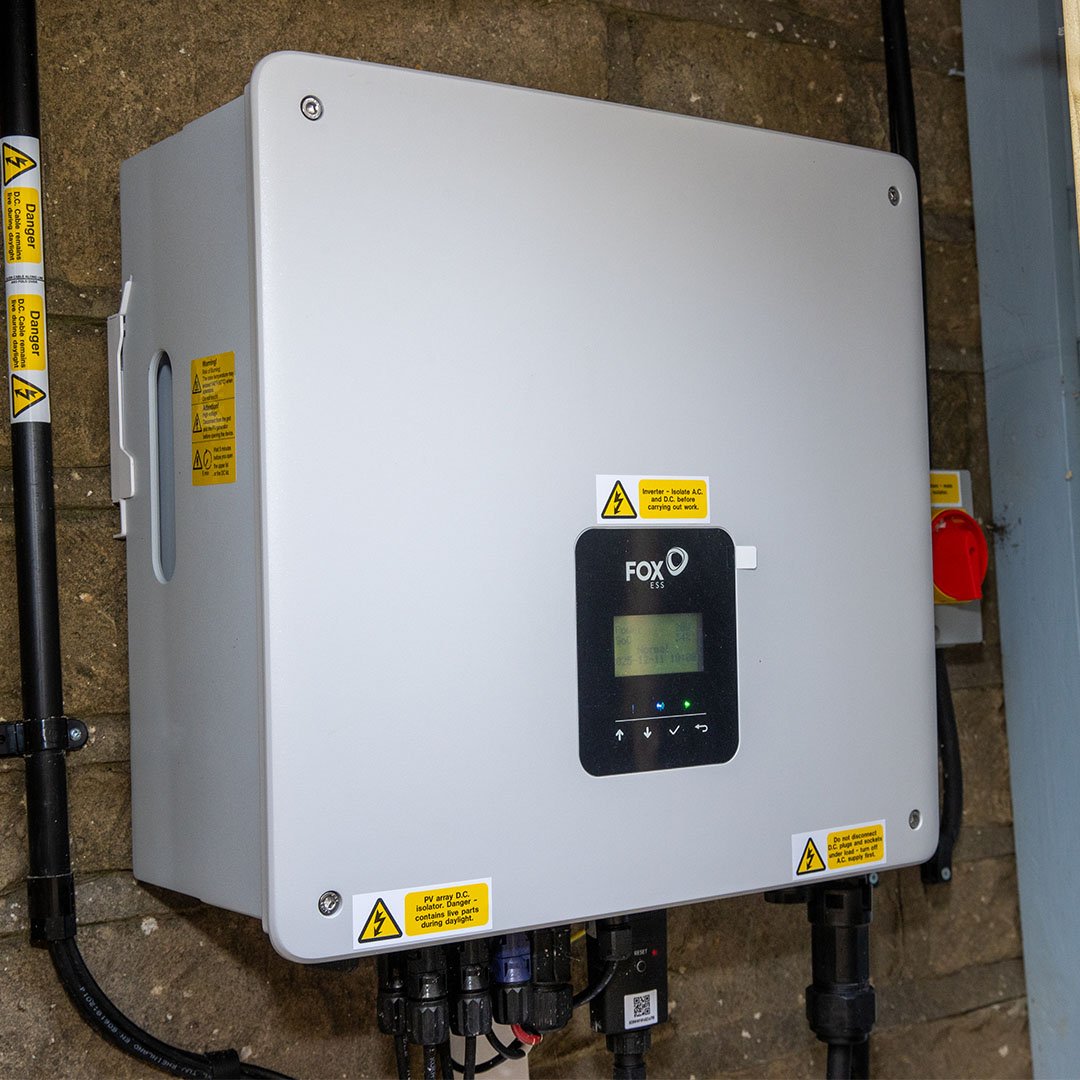
| Solar only (8 DMEGC 450W panels + Fox 3600 inverter) | from £4,995 |
| Solar + Fox ESS battery (Budget) | from £6,995 |
| Solar + EcoFlow / Sigenergy battery (Standard) | from £8,418 |
| Solar + Tesla Powerwall 3 (Premium) | from £12,920 |
| Battery only — Tesla Powerwall 3 retrofit (13.5kWh) | from £7,450 |
What a 4kW system generates in West Sussex
Estimated annual output by roof direction, using West Sussex's irradiance. South-facing performs best; east/west roofs still generate strongly.
South-facing
~4,100–4,400 kWh
East-facing
~3,300–3,700 kWh
West-facing
~3,300–3,700 kWh
Grants & export income
There's no single grant that pays for a typical West Sussex solar install, and we won't pretend otherwise — most owner-occupiers here won't qualify for one. Means-tested and property-condition schemes such as ECO4 and the Warm Homes Local Grant target lower-income or low-EPC households, and council-backed Solar Together group-buying rounds appear in some Sussex areas but come and go; we'll tell you honestly if you're eligible rather than build a quote around a grant you can't get. For the vast majority of homeowners the real ongoing earner is the Smart Export Guarantee (SEG): with an MCS-certified install and a smart export meter, your supplier pays you for the power you send back to the grid — as of mid-2026 tariffs pay roughly 10.5p–16.5p per kWh on the open market — Octopus Outgoing pays 12p, cut from 15p to 12p on 1 March 2026, and the headline 25p-plus rates you may see quoted are either closed to new customers or conditional on buying your system through that supplier, though each supplier sets and changes its own rate, and you can hold your SEG tariff with a different supplier than your import one.
Why work with us in West Sussex
- ✓We file with UKPN — the correct DNO for Sussex (not SSEN)
- ✓Heritage-sensitive, all-black systems for Chichester and conservation areas
- ✓South Downs National Park planning experience
- ✓Regular presence on the PO/BN coastal corridor
Our services across West Sussex
Solar Only
Generate clean energy, reduce your bills, and take the first step towards energy independence.
Solar & Battery
Maximise your energy, reduce costs and increase independence with a combined solar and battery system.
Battery Only
Flexible, efficient battery storage for every home — even without solar panels.
EV Charging
Charge at home, efficiently and cost-effectively with smart EV charging solutions.
FAQ
Solar panels in West Sussex: FAQs
How much do solar panels cost in West Sussex?
Which electricity network (DNO) covers West Sussex?
Do you need planning permission for solar panels in West Sussex?
Which towns in West Sussex do you cover?
Which DNO covers West Sussex, and do you handle the grid application?
I live in a Chichester conservation area — do I need planning permission for solar?
How much does solar cost in West Sussex, and what does the price depend on?
Is West Sussex actually sunny enough for solar to be worthwhile?
Solar panel installers in West Sussex: what changes once you cross the county line
The first thing that changes when we come over from Hampshire is the grid operator. Hampshire, the Isle of Wight and Dorset sit with SSEN; West Sussex sits with UK Power Networks, as do East Sussex and most of Surrey. It makes no difference at all to the panels on your roof, but it does change who we apply to, which forms get filed and how the approval runs. We handle that application either way — it's part of the job, not an extra line on the quote — but it's worth knowing that a Worthing install and a Portsmouth install follow two different paper trails even when the system on the roof is identical.
The grid rule itself is straightforward. Anything up to 3.68kW per phase falls under G98: connect and notify, so the paperwork follows the installation. Anything larger, and anything with battery storage or export, is G99 — applied for and approved by UKPN before we fit a single bracket. Because most systems we design now include storage, the majority of our West Sussex jobs are G99. That isn't a problem, it just means the timeline starts with an application rather than a fitting date, and we would far rather tell you that at quotation stage than after you have paid a deposit.
Housing in the county splits fairly neatly either side of the South Downs. The coastal belt — Bognor Regis, Littlehampton, Worthing — is dominated by bungalows, post-war housing and seafront terraces, often with smaller roof planes and a lot of east–west orientation, which costs roughly 15–20% against a south-facing array. North of the Downs around Horsham you tend to find larger detached and estate housing with bigger, cleaner south-facing roofs. The South Coast sees around 1,050–1,150 kWh per kWp a year either way, so a 4kW south-facing array here should generate somewhere around 3,900–4,600 kWh annually. The roof, not the postcode, is what usually decides your number.
Chichester and Arundel need more care than anywhere else in the county. Both have historic cores where conservation-area status and listed buildings genuinely constrain what can go on a visible elevation, and we would always rather establish that before designing a system than after. In practice it often means working with a rear roof, a garage or an outbuilding — and occasionally it means telling you the front elevation isn't worth pursuing. Gulls are the other coastal reality, which is why bird protection mesh is included as standard rather than sold as an upsell. And with Octopus Outgoing Fixed now paying 12p, cut from 15p on 1 March 2026, and open-market flat SEG rates around 10.5p–16.5p, using your own generation beats exporting it — which is why battery sizing matters more here than chasing panel count.
- ✓Worthing — long seafront terraces and interwar semis mean a lot of east–west roof planes running parallel to the coast, so we quote the honest 15–20% shortfall against south-facing rather than the headline figure.
- ✓Horsham — inland and north of the Downs, with larger detached and estate housing that often carries the clean, unshaded south-facing roof a 16-panel system with a Tesla Powerwall 3 is built for.
- ✓Chichester — the Georgian city centre and its conservation area frequently push the workable array round to the rear roof or an outbuilding, so a survey comes before any design.
- ✓Bognor Regis — bungalows and post-war housing near the front give you limited roof area, which is often where a battery-led package makes more sense than squeezing on extra panels.
- ✓Littlehampton — exposed plots either side of the Arun mouth, where fixing detail and gull-proofing matter as much as the panel spec; the bird protection mesh is standard here for good reason.
- ✓Arundel — a tight historic core beneath the castle with steep-pitched roofs, and the one town where we are most likely to survey a property and tell you honestly that it isn't a good candidate.
Is West Sussex covered by SSEN or UK Power Networks?+
UK Power Networks. UKPN covers East and West Sussex and most of Surrey, while SSEN covers Hampshire, the Isle of Wight, Dorset and west Surrey. We work across both and file the grid application for you either way.
Will my system need G99 approval?+
If it is larger than 3.68kW per phase, or includes battery storage or export — yes, and it has to be applied for and approved before the installation goes ahead. Systems up to 3.68kW per phase are G98, which is connect-and-notify. We file whichever applies as part of the job.
How much will solar panels generate in West Sussex?+
The South Coast sees roughly 1,050–1,150 kWh per kWp per year, so a 4kW south-facing array typically produces around 3,900–4,600 kWh annually. East or west-facing roofs — common along the Worthing and Bognor coastline — come in about 15–20% lower.
Can I install solar on a house in a Chichester or Arundel conservation area?+
Often yes, but it depends on the elevation and whether the property is listed, so we survey and check before designing anything. Frequently the answer is a rear roof, garage or outbuilding — and if a roof genuinely isn't viable, we will tell you rather than sell you a compromise.
What does a system cost?+
All our prices are "from" and subject to survey. Solar only starts from £4,995; solar with a Tesla Powerwall 3 runs from £12,920 for 12 panels to £13,560 for 16, with a £375 Tesla rebate available. A Powerwall 3 battery-only retrofit is from £7,450, or £13,950 expanded to 27kWh. We're a Tesla Certified Installer, which is a scarce accreditation and the reason we can fit and support these properly.
Get a free solar quote in West Sussex
Get a free, no-obligation quote tailored to your home — expert local advice, clear pricing and finance options across the South Coast.