
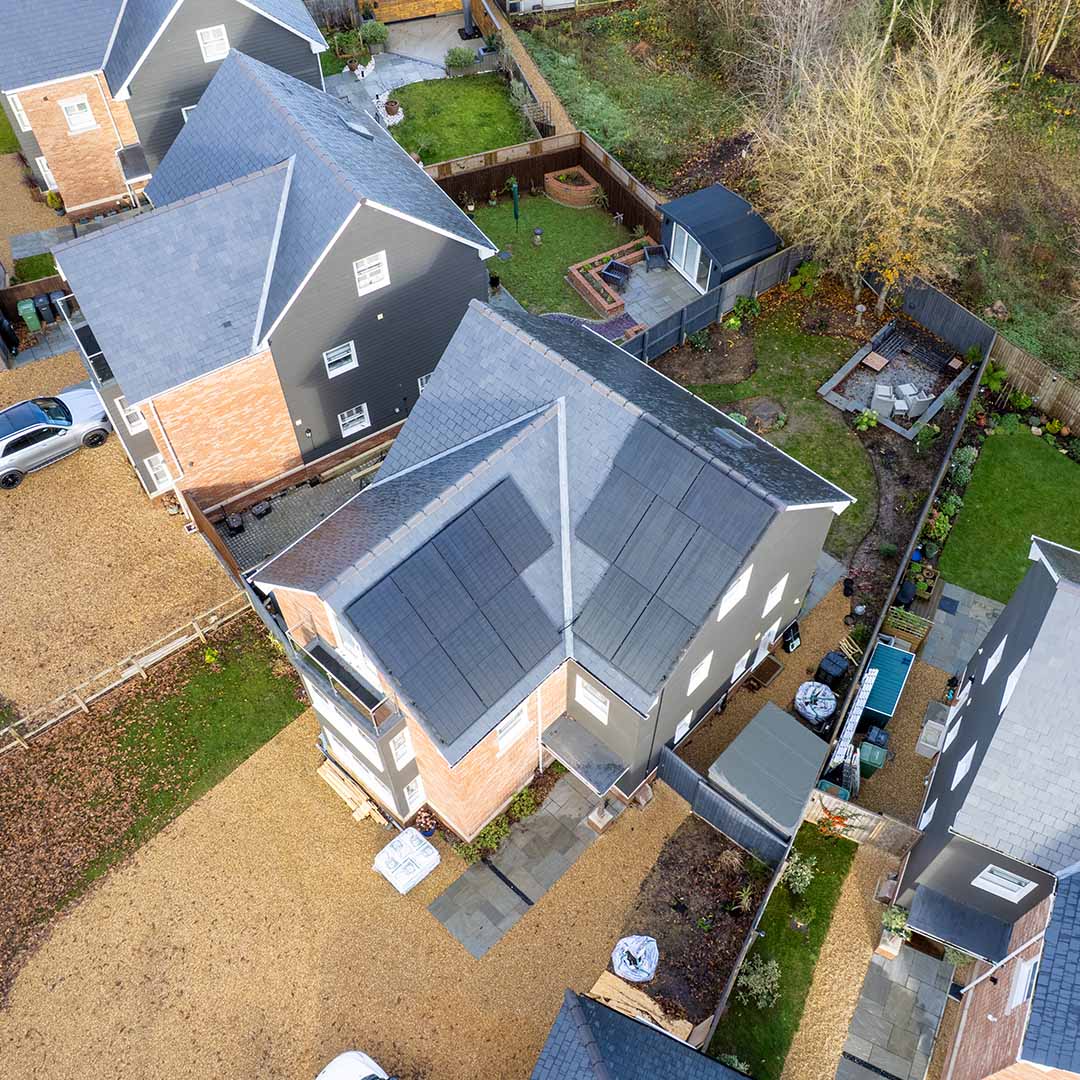
A clear explanation of why the South Coast gets more sunshine than most of the UK, and what that means for solar generation, savings and payback.
It's a familiar piece of local pride along the South Coast: this is one of the sunniest parts of the country. For solar, that's more than a talking point, it's a genuine financial advantage. The strip from Dorset through Hampshire and the Isle of Wight into West Sussex consistently records some of the highest annual sunshine totals in the UK, and that extra light feeds directly into how much electricity a solar array produces over its lifetime. Understanding why the region is so favoured, and what the numbers actually mean, helps homeowners judge solar realistically rather than relying on national averages that undersell what's possible here.
The headline measure installers use is solar irradiance, the total solar energy falling on a given area over a year, usually expressed as kWh per square metre or, for solar design, as the expected annual yield per kWp of panels installed. Across the Solent and the wider South Coast, that figure typically sits in the region of 1,050 to 1,150 kWh per kWp per year. By comparison, much of central and northern England comes in lower, and parts of Scotland lower still. The difference might look modest on paper, but over a 25-year-plus panel lifetime it compounds into a meaningfully larger total of generated electricity, and therefore larger savings and a quicker return.
Why does the South Coast do so well? Several factors line up. Its southerly latitude means the sun climbs higher in the sky, especially in summer, delivering more direct light onto roofs. The maritime position keeps the climate relatively settled, and coastal areas often enjoy clearer skies as weather systems track around rather than parking overhead. The Isle of Wight and the Solent in particular benefit from a sheltering effect and high sunshine records, while resorts like Bournemouth and Eastbourne frequently appear at the top of national sunshine league tables. None of these are guarantees of a sunny day, but across a full year they tilt the odds firmly in homeowners' favour.
It's worth clearing up a common confusion, because sunshine hours and solar generation are related but not identical. Sunshine hours count the time the sun is recorded as visibly shining, while solar panels also generate from diffuse light on overcast days, just at a reduced rate. So even when the South Coast has a grey spell, panels keep working, simply producing less than under full sun. The reason the region scores so well for solar is the combination: more bright hours when output peaks, plus reasonable diffuse generation the rest of the time. Modern panels are also better than older ones at harvesting low and diffuse light, which narrows the gap between sunny and cloudy days.
Generation across the year follows a strong seasonal curve, and it helps to set expectations honestly. A South Coast array will produce the lion's share of its annual energy between roughly April and September, with the long, high-sun days of midsummer comfortably exceeding a typical household's daytime needs. Winter output is much lower, sometimes a fraction of summer levels on short, overcast December days. This seasonality is exactly why batteries and smart tariffs have become so popular here: a battery stores abundant summer daytime generation for evening use, and pairing solar with a smart export tariff, such as those from Octopus, lets homeowners make the most of the surplus rather than giving it away cheaply.
What does the region's strong irradiance mean in pounds and pence? Because generation is higher than the UK average, the same system pays for itself a little faster here than it would inland. For a typical well-specified South Coast home, payback currently tends to land somewhere in the seven to eleven year range, with the sunshine helping pull it toward the shorter end and rising electricity prices doing the same. After payback, the panels keep generating largely for free for the remainder of their 25-year-plus working life. These are realistic ranges, not promises, and the exact outcome depends on your roof orientation, shading, usage pattern and the system you choose.
Roof orientation and angle then determine how much of that regional advantage your specific home captures. A south-facing roof pitched around 30 to 40 degrees is close to ideal and makes the fullest use of the South Coast's high sun. East and west-facing roofs still perform well, capturing more morning and afternoon light and spreading generation across the day in a way that often suits household routines. Shading from trees, chimneys or neighbouring buildings reduces output, which is why a proper site assessment matters more than any regional average. The sunshine advantage is real, but it's your own roof that decides how much of it you bank.
There's also a simple lifestyle point behind the figures. Generating your own electricity from abundant local sunshine means more of your energy comes from a source you control, which feels increasingly valuable as grid prices stay volatile. It lowers your carbon footprint, insulates you against future price rises, and on a bright South Coast summer's day there's real satisfaction in running the house on free power and exporting the rest. The region's sunshine isn't just a statistic, it's a head start that thousands of local homes are already putting to work.
If you'd like to know what your specific roof could generate given the South Coast's strong sunshine, the best starting point is a straightforward, no-pressure assessment of your home. As a family-run, MCS-certified installer covering Hampshire, the Isle of Wight, Dorset, Sussex and Surrey, we'll give you honest figures based on your actual roof rather than a national average. Get in touch for a free quote, or try our solar calculator to see how much sunshine your home could turn into savings.
Thinking about solar for your home?
We design every system around your roof and your real usage, across Hampshire, the Isle of Wight, Surrey, Sussex and Dorset. Get a free, no-obligation quote →
Cornerstone guide
Solar Panels on the South Coast: The Complete Regional Guide →Read next
Solar Panels in Southampton: Costs, Roofs & Grid Connection
A practical look at what solar costs in Southampton, the roof types across the city, and how SSEN grid connections work for local homeowners.
Solar Panels in Bournemouth & Poole: A Dorset Guide
What homeowners in Bournemouth and Poole need to know about solar costs, roof types, coastal conditions, grid connection and exporting energy in Dorset.
Solar Panels in Chichester: Conservation Areas & Planning
How conservation areas, listed buildings and permitted development rules affect solar in and around Chichester, and how local homeowners can still go solar.