
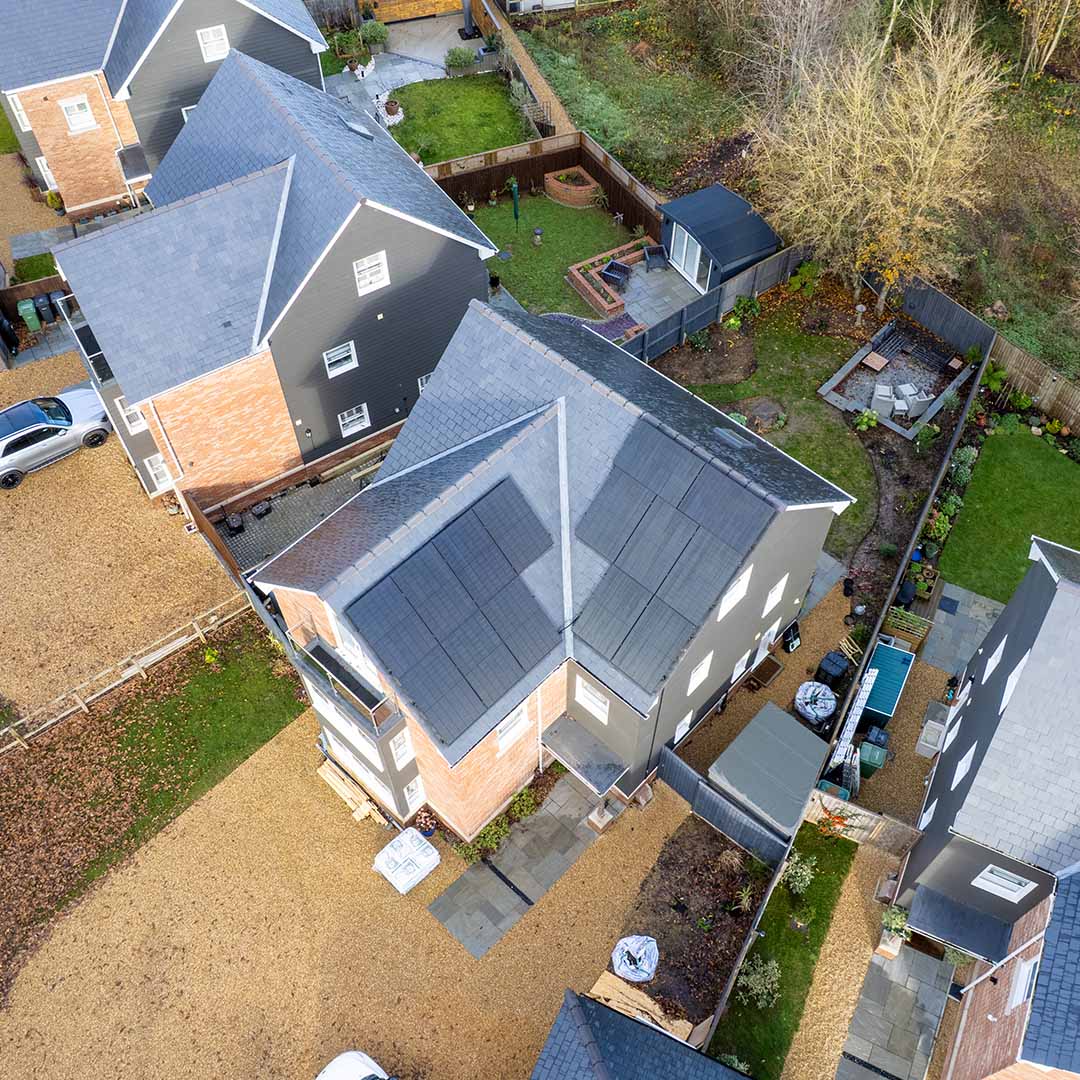
Month-by-month PVGIS figures for a 4kW array in Poole, what they mean for battery sizing, and how SSEN and Octopus export rates fit in.
Most solar quotes give you one number: what the panels will make in a year. That figure is useful, but it hides the thing that shapes almost every decision after it, which is how unevenly that energy arrives. Here is what a typical roof in Poole produces month by month, and why it matters for batteries, tariffs and expectations.
The figures come from PVGIS 5.3, the European Commission's free solar model, which uses satellite data from 2005 to 2023. We modelled a 4kW array on an unshaded, south-facing roof at a 35-degree pitch in Poole. Over a year it produces about 4,430 kWh. Point the same array east and it drops to about 3,466 kWh; west, about 3,496 kWh.
Month by month, the south-facing array makes about 168 kWh in January, 234 in February and 381 in March. It then climbs to 502 kWh in April, 540 in May, 542 in June and 547 in July, before easing to 483 in August, 406 in September, 279 in October, 200 in November and 147 in December. In other words, about 3,020 kWh of the year arrives between April and September, and about 1,409 kWh in the other six months.
That shape has three practical consequences. First, summer is when you will export the most, because generation outstrips daytime use. Second, winter output is modest: 147 kWh in December is under 5kWh a day, so in midwinter there is usually little surplus left to store. Third, a battery earns most of its value from spring to autumn, when there is surplus to store for the evening.
So size the battery for the months when it has work to do. A battery bigger than your evening use in May or June will sit partly empty; one that is too small will export surplus you could have used. We look at your actual usage pattern at the survey rather than picking a size from a table.
Export rates matter too, because what you don't store or use gets sold. Poole is on SSEN's network, which places it in Octopus's Southern England tariff region. On 17 September 2026 Octopus Flux paid 29.00p per kWh for exports between 4pm and 7pm there, 10.08p during the day and 4.74p between 2am and 5am. The Outgoing Octopus tariff pays a flat 12p. Flux only makes sense with a battery that can hold charge for that evening window; panels on their own mostly export at midday.
Remember that PVGIS figures assume an unshaded roof. Trees, chimneys and neighbouring buildings reduce real output, which is one reason a survey matters more than any online estimate. Your pitch, the exact direction your roof faces and the panels themselves all move the final number too.
The grid paperwork is the same whatever you choose. A battery install needs a G99 application to SSEN, approved before anything is fitted, and we submit it for you. Smaller solar-only systems up to 3.68kW per phase are notified under G98 after installation.
If you want to see what your own roof could do, our page on solar panels Poole covers local prices and the SSEN connection. For storage on its own, we also cover Tesla Powerwall installers in Dorset.
Thinking about solar for your home?
We design every system around your roof and your real usage, across Hampshire, the Isle of Wight, Surrey, Sussex and Dorset. Get a free, no-obligation quote →
Cornerstone guide
Solar Panels on the South Coast: The Complete Regional Guide →Read next
Solar Panels in Southampton: Costs, Roofs & Grid Connection
A practical look at what solar costs in Southampton, the roof types across the city, and how SSEN grid connections work for local homeowners.
Solar Panels in Bournemouth & Poole: A Dorset Guide
What homeowners in Bournemouth and Poole need to know about solar costs, roof types, coastal conditions, grid connection and exporting energy in Dorset.
Solar Panels in Chichester: Conservation Areas & Planning
How conservation areas, listed buildings and permitted development rules affect solar in and around Chichester, and how local homeowners can still go solar.
Ask us about your home
A free, no-obligation quote from our MCS-certified team.