
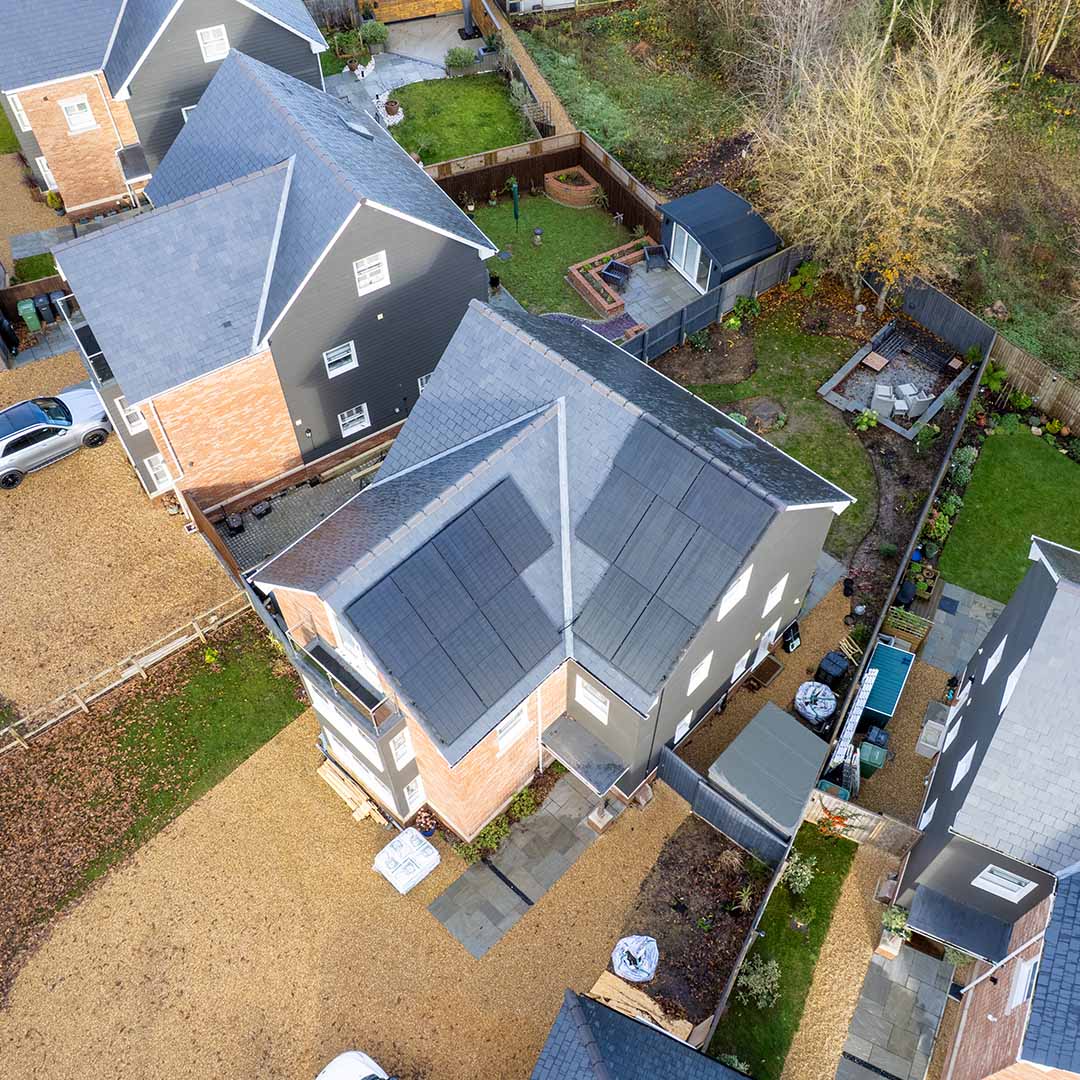
Your DNO decides how your solar connects to the grid. Here's the SSEN–UKPN split across Hampshire, IoW, Dorset, Sussex and Surrey — plus G98, G99 and what it means for your install, from SCSS.
When you install solar panels or a home battery, one organisation quietly shapes how the whole thing connects to the grid: your Distribution Network Operator, or DNO. The DNO owns and runs the local cables, substations and infrastructure that carry electricity to your home, and it's the body that must be told about — and in some cases must approve — your new generation equipment. On the South Coast there are two DNOs, and which one you have depends entirely on your postcode.
SSEN, which stands for Scottish and Southern Electricity Networks, covers Hampshire, the Isle of Wight and Dorset. So if your home is in Portsmouth, Southampton, Winchester, anywhere on the Island, or across Dorset towards Bournemouth and Poole, your DNO is SSEN. UK Power Networks, often shortened to UKPN, covers Sussex and most of Surrey — so homes in Brighton, Worthing, Chichester, Crawley and across the Surrey commuter belt connect through UKPN. There can be small boundary overlaps at the edges, which is why your installer confirms it precisely from your address before any application is made.
It's worth being clear about what a DNO is not. Your DNO is different from your energy supplier — the company that sends your bills and that you pay for electricity, like Octopus, EDF or British Gas. You can switch supplier freely, but you cannot choose your DNO; it's fixed by geography. The DNO's job is the physical network, while your supplier handles the commercial side, including paying you for exported electricity under the Smart Export Guarantee. Both matter for solar, but they do entirely different things.
The practical reason the DNO matters to you comes down to two connection processes: G98 and G99. For most standard domestic solar and battery installations, the system is small enough to be connected under G98, which means your installer simply notifies the DNO after the work is commissioned. There's no waiting for permission — the notification is a formality completed on your behalf. This covers the large majority of typical home installations across both SSEN and UKPN areas.
G99 applies to larger systems, or to properties where the local network is already constrained. Under G99, an application must be submitted to the DNO and approved before the installation goes ahead. This protects the network from being overloaded and ensures the grid can safely absorb your exported power. A G99 application takes time — sometimes several weeks — and the DNO may impose an export limit, capping how much electricity your system is allowed to send back to the grid even though it can still generate freely for your own use. Knowing early whether you fall under G98 or G99 is one of the main reasons we check your network position at the survey stage.
Both SSEN and UK Power Networks run broadly similar processes, but timescales and network capacity can differ by area, and some parts of the grid — particularly in rural Dorset, on the Isle of Wight, or in pockets of the Sussex Weald — are more constrained than others. This occasionally affects the maximum system size or export limit available at a given property. It's rarely a dealbreaker, and a well-designed system can usually work within whatever limit applies, but it's exactly the kind of thing you want flagged honestly upfront rather than discovered halfway through.
The reassuring part is that you don't have to deal with any of this yourself. As an MCS-certified installer, South Coast Solar Solutions handles the DNO notification or application as a standard part of every job — we identify your DNO from your postcode, determine whether your system needs G98 notification or a G99 application, submit the paperwork, and manage any export-limit considerations. You simply get a clear explanation of what applies to your home and why.
If you're not sure which DNO covers your postcode or whether your planned system needs DNO approval, the easiest answer is to ask. Get a free quote from SCSS and we'll confirm your DNO, check the connection route and give you an honest assessment of what's possible at your address — and you can use our calculator first for a quick estimate of system size and savings. We're a family-run, MCS-certified team covering the whole South Coast, and there's never any pushy sales, just straight answers.
Thinking about solar for your home?
We design every system around your roof and your real usage, across Hampshire, the Isle of Wight, Surrey, Sussex and Dorset. Get a free, no-obligation quote →
Cornerstone guide
Solar Panels on the South Coast: The Complete Regional Guide →Read next
Solar Panels in Southampton: Costs, Roofs & Grid Connection
A practical look at what solar costs in Southampton, the roof types across the city, and how SSEN grid connections work for local homeowners.
Solar Panels in Bournemouth & Poole: A Dorset Guide
What homeowners in Bournemouth and Poole need to know about solar costs, roof types, coastal conditions, grid connection and exporting energy in Dorset.
Solar Panels in Chichester: Conservation Areas & Planning
How conservation areas, listed buildings and permitted development rules affect solar in and around Chichester, and how local homeowners can still go solar.