
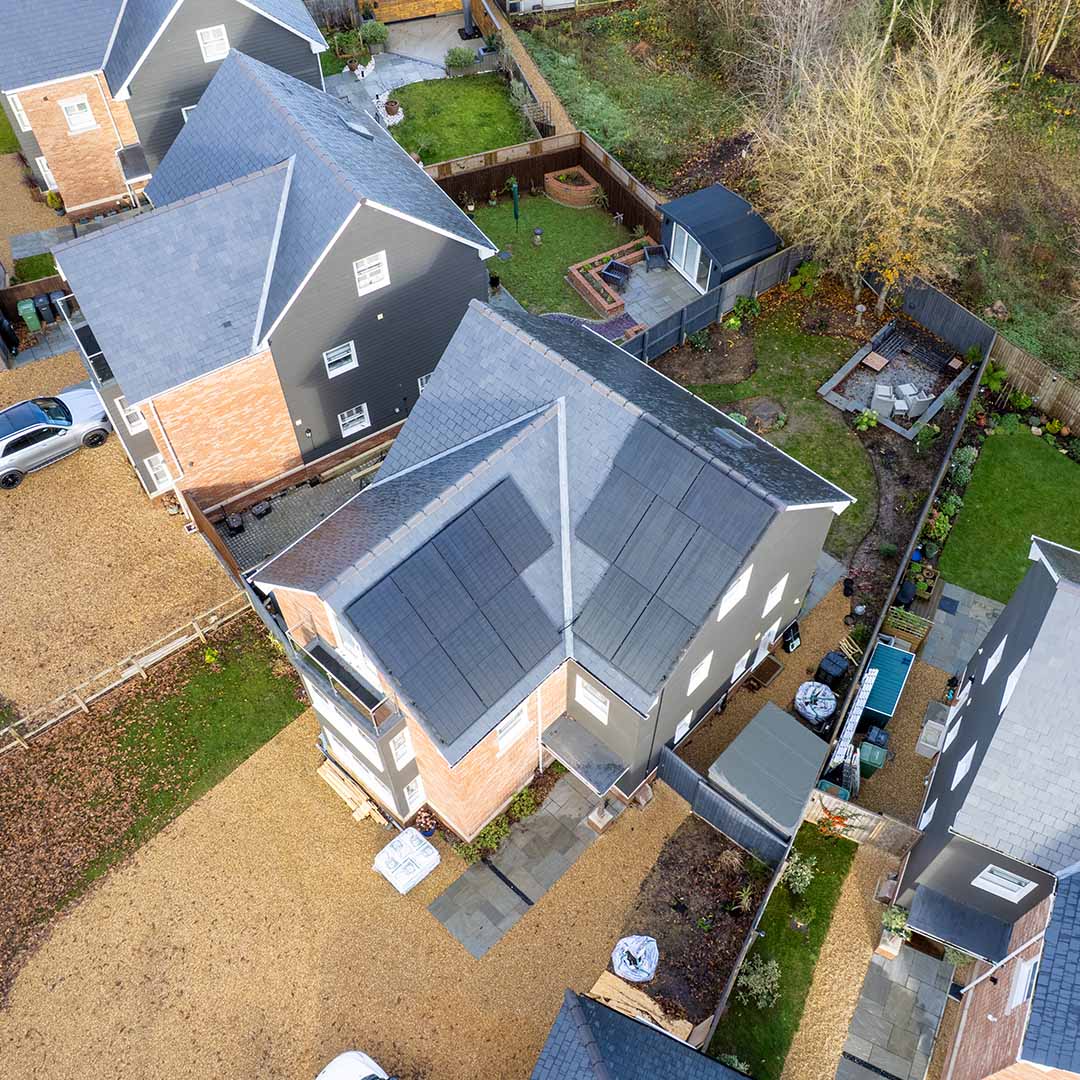
Most South Coast homeowners can install solar under permitted development with no application. Here are the rules, the exceptions, and how to check for your Hampshire, Sussex, Surrey or Dorset home.
For the large majority of homeowners across Hampshire, the Isle of Wight, Surrey, Sussex and Dorset, the answer is reassuringly simple: no, you do not need planning permission to install solar panels. Roof-mounted solar on a typical house is treated as 'permitted development', which means it is pre-approved by national rules and needs no application to your council. That said, there are clear conditions to meet and some important exceptions, so it is worth understanding where your property sits before you book an install.
Permitted development for solar comes with a handful of common-sense limits. The panels must not protrude more than 200mm from the roof slope or wall surface. They must not sit higher than the highest part of the roof, excluding the chimney. And, so far as practicable, they should be sited to minimise their effect on the appearance of the building and the wider area. For nearly every standard pitched-roof house on the South Coast, a well-designed array comfortably meets these conditions, which is why most of our installs proceed with no planning involvement at all.
Ground-mounted solar is also permitted development within limits. A standalone ground array is generally allowed where it is no more than four metres high, the array is under nine square metres, and it is sited away from the highway and not in front of the principal elevation. Larger ground systems, or installations on bigger plots, can exceed these thresholds and then a planning application is needed. If you have land and are weighing a ground mount against a roof install, this is one of the details we check during a site survey.
Now the exceptions, because this is where people occasionally get caught out. Permitted development rights are restricted or removed for listed buildings, properties in conservation areas, and homes within Areas of Outstanding Natural Beauty such as Chichester Harbour, the Surrey Hills, the High Weald or parts of the Dorset coast. Flats and maisonettes fall outside standard householder permitted development. And some newer estates have had permitted development rights withdrawn by a planning condition, an 'Article 4 direction', so even a standard house there may need an application. None of these are automatic refusals, but they do mean an extra check.
Listed buildings deserve a specific mention. If your home is listed, you will almost certainly need listed building consent for solar, regardless of which roof slope the panels go on, and that is separate from planning permission. Conservation areas are more nuanced: panels on a rear or side roof that cannot be seen from the road often remain permitted development, while panels facing a highway or public space may need planning permission. We cover this in detail in our conservation-area guide, and we can assess your specific situation as part of a free survey.
Beyond planning, there is a separate technical permission worth knowing about: connecting to the grid. Smaller domestic systems can usually be connected under a 'notify after install' arrangement, where your installer registers the system with the Distribution Network Operator. On the South Coast that is SSEN for Hampshire, the Isle of Wight and Dorset, and UKPN for Sussex and most of Surrey. Larger systems, or homes with batteries above certain thresholds, may need prior approval before connection. As an MCS-certified installer we handle this paperwork for you, so you are not left navigating the DNO process alone.
So how do you check your own situation in a couple of minutes? First, find out if your home is listed or in a conservation area — your council's website or the National Heritage List will tell you. Second, check whether you are within an AONB or subject to an Article 4 direction, again via your local planning authority. Third, confirm your roof design will stay within the 200mm and ridge-height limits, which for most houses it will. If all three come back clear, you are almost certainly within permitted development.
If any of those checks raise a question, that is exactly the kind of thing we sort out before you commit. South Coast Solar Solutions is family-run and MCS-certified, based in Portsmouth, and we deal with planning queries and DNO connections as standard. Request a free, no-obligation quote and we will confirm whether your install is permitted development or needs an application, then handle the relevant paperwork either way — with no pressure to proceed until you are comfortable.
Thinking about solar for your home?
We design every system around your roof and your real usage, across Hampshire, the Isle of Wight, Surrey, Sussex and Dorset. Get a free, no-obligation quote →
Cornerstone guide
Solar Panel Grants & Planning on the South Coast (2026) →Read next
Solar Together Hampshire: Is Collective Buying Worth It?
Solar Together is a council-backed group-buying scheme that promises discounted solar through bulk purchasing. We explain how it works on the South Coast and where it helps — and where it falls short.
Warm Homes Local Grant & ECO4: Do You Qualify?
Government-backed energy efficiency schemes can fund solar and other improvements for some households. We explain who qualifies for the Warm Homes Local Grant and ECO4 on the South Coast — honestly.
Solar Panels and Your EPC Rating (and Why MEES Matters)
Solar panels can lift your home's EPC rating, which matters for landlords under MEES rules and for any homeowner thinking about future resale. Here's how it works on the South Coast.