
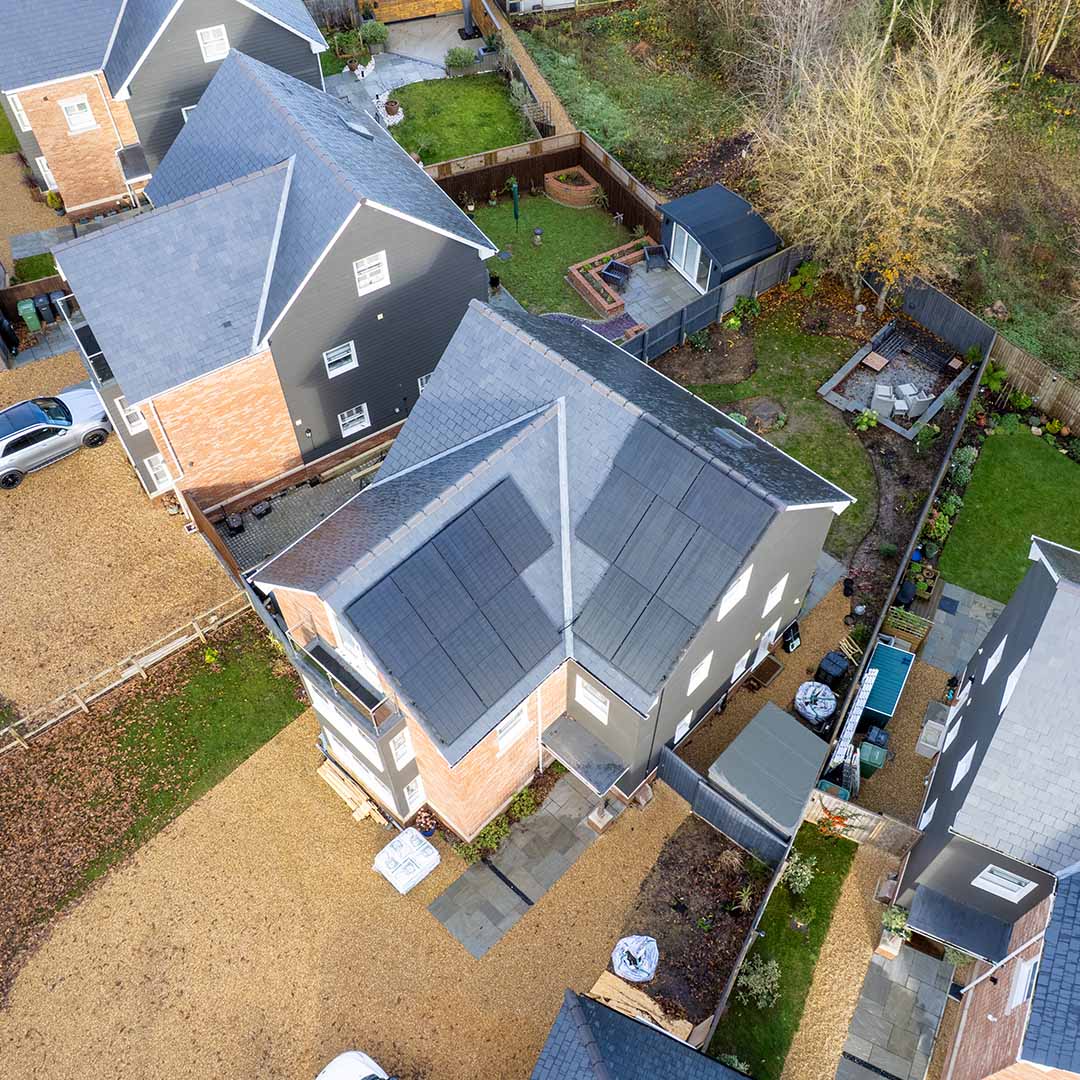
Government-backed energy efficiency schemes can fund solar and other improvements for some households. We explain who qualifies for the Warm Homes Local Grant and ECO4 on the South Coast — honestly.
There is a lot of noise online about 'free solar panels' and government grants, and most of it is exaggerated or simply wrong. But genuine, government-backed energy efficiency schemes do exist, and for some households they can cover a meaningful share of the cost of solar, insulation and other improvements. Two of the most relevant in England right now are the Warm Homes: Local Grant and the Energy Company Obligation, known as ECO4. Neither is a blanket offer for every homeowner, so the useful question is not 'is there a grant?' but 'do I personally qualify, and for what?'
The Warm Homes: Local Grant is the successor scheme to the earlier Home Upgrade Grant and is delivered through local authorities, with funding allocated to councils that then run their own application processes. It is aimed squarely at lower-income households living in poorly insulated homes, and the typical eligibility tests look at two things together. First, your household income — broadly, lower-income households are prioritised, often defined by a gross household income below a set threshold or receipt of certain means-tested benefits. Second, the energy efficiency of your property, usually measured by your Energy Performance Certificate (EPC) rating, with the worst-rated homes (typically EPC D, E, F or G) being eligible while better-rated homes are not. The logic is to direct money where it cuts bills and carbon the most.
ECO4 works differently. It is not funded by the council or central grant pot but is an obligation placed on the larger energy suppliers, who must deliver energy-saving measures to qualifying households. Because the suppliers run it, the routes in vary, but eligibility again centres on receiving qualifying benefits — things like Universal Credit, Pension Credit, income-based ESA or JSA, Child Tax Credit and similar. ECO4 also has a flexible eligibility route, often called ECO Flex, where local councils can refer households who do not claim those benefits but are on low incomes or are vulnerable to the cold for health reasons. ECO4 tends to take a 'whole house' approach, meaning it usually prioritises insulation and heating before, or alongside, technologies like solar.
It is important to be honest about where solar sits within these schemes. Both Warm Homes and ECO4 are primarily about reducing wasted energy, so the first measures funded are almost always loft and cavity-wall insulation, draught-proofing and efficient heating. Solar photovoltaic panels can be funded, but generally as part of a package once the fabric of the home is up to standard, and not as a standalone freebie. If a company tells you they can hand you a full solar system at no cost with no questions asked, treat that as a warning sign rather than a windfall — the legitimate schemes have real eligibility criteria and a proper survey process.
For South Coast homeowners, the practical first step is to check your council's website. Hampshire households should look at Hampshire County Council and their district council; Portsmouth and Southampton run their own unitary schemes; the Isle of Wight, and the relevant authorities in Surrey, West Sussex, East Sussex and Dorset, each administer their share of Warm Homes funding locally, sometimes through a partner delivery organisation. Availability and exact criteria change as funding rounds open and close, so the position can differ between neighbouring councils. The national GOV.UK pages and the free, impartial GOV.UK 'Find ways to save energy in your home' service are good starting points, and your local Citizens Advice can help you check benefit-related eligibility without any sales pressure.
If you do qualify, the process generally runs like this: an eligibility check confirms your income or benefits status and your EPC rating, a surveyor assesses your home to recommend measures in the right order, and an approved installer carries out the work, which must be done to recognised standards (PAS 2035 for retrofit, and MCS certification for any solar element). You should never be asked to pay an up-front fee to 'unlock' a grant, and you should always get clear paperwork setting out what is being installed and what, if anything, you are contributing.
What if you do not qualify? This is the reality for many homeowners, because these schemes are deliberately targeted at lower-income and poorly insulated households. The good news is that solar is now far more affordable than it was even a few years ago, and the support that is universal still helps everyone. Residential solar and battery storage carry 0% VAT, which removes a fifth from the installed cost at a stroke. The Smart Export Guarantee pays you for surplus electricity you export, with competitive rates available from suppliers such as Octopus. And the strong solar resource on the South Coast — among the highest irradiance in the UK at roughly 1,050 to 1,150 kWh per kWp each year — means panels here generate more than they would further north, improving the payback. For most homeowners, a well-sized self-funded or finance-backed system pays for itself through bill savings and export income rather than through a grant.
Our advice is straightforward. Check whether you qualify for Warm Homes or ECO4 first, using official sources — if you do, it can be genuinely valuable, particularly when bundled with insulation. If you do not, do not be disheartened, and do not chase 'free panel' offers that sound too good to be true. The economics of solar on the South Coast stand up well on their own merits. If you would like an honest assessment of what a system would cost and save on your specific home — grant or no grant — we are happy to talk it through with no pushy sales, or you can start with our solar calculator to see indicative figures.
Thinking about solar for your home?
We design every system around your roof and your real usage, across Hampshire, the Isle of Wight, Surrey, Sussex and Dorset. Get a free, no-obligation quote →
Cornerstone guide
Solar Panel Grants & Planning on the South Coast (2026) →Read next
Solar Together Hampshire: Is Collective Buying Worth It?
Solar Together is a council-backed group-buying scheme that promises discounted solar through bulk purchasing. We explain how it works on the South Coast and where it helps — and where it falls short.
Solar Panels and Your EPC Rating (and Why MEES Matters)
Solar panels can lift your home's EPC rating, which matters for landlords under MEES rules and for any homeowner thinking about future resale. Here's how it works on the South Coast.
0% VAT on Solar Panels: What's Covered and Until When?
Residential solar and battery installations currently carry 0% VAT, a significant saving for homeowners. We explain exactly what's covered, what isn't, and how long the relief is expected to last.