
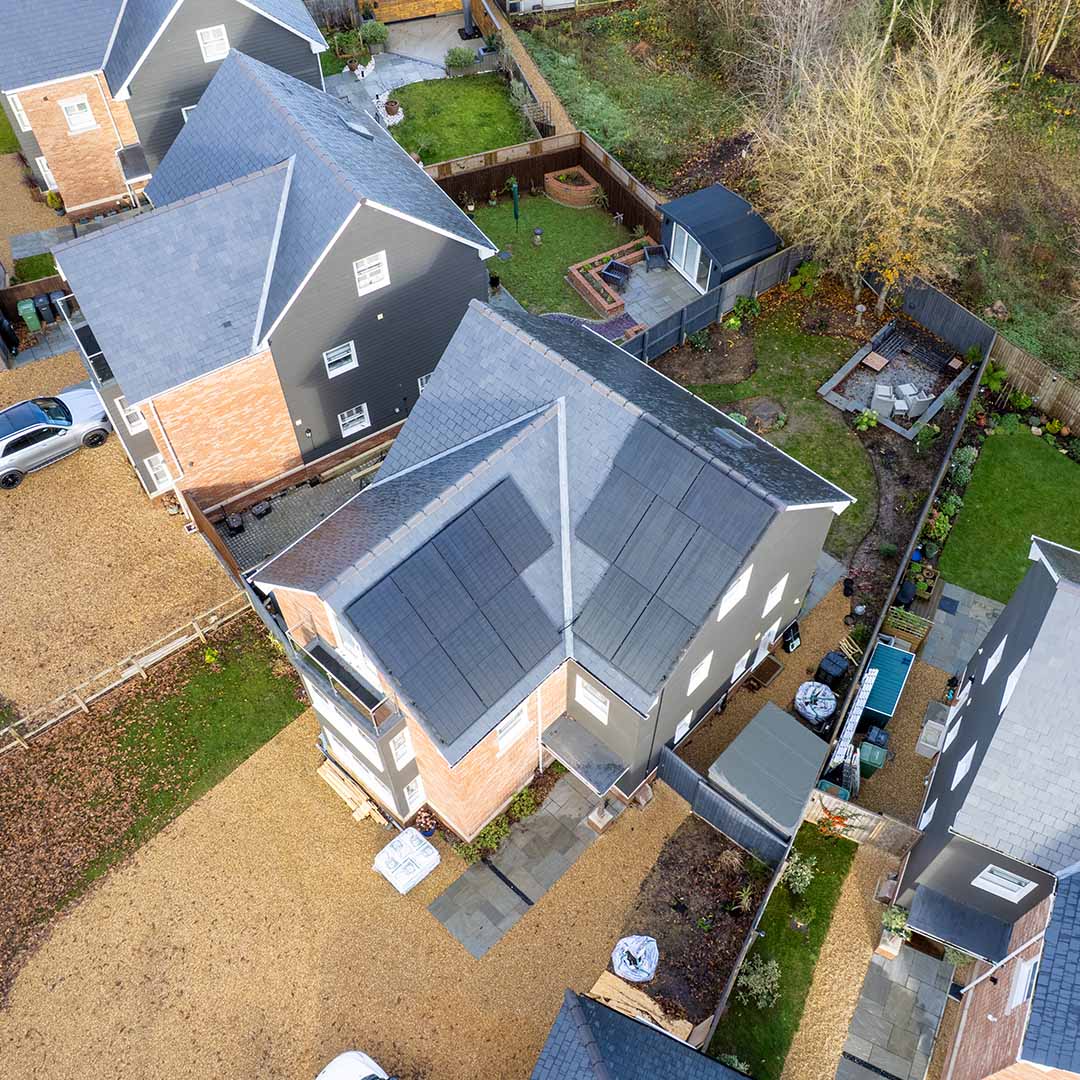
Residential solar and battery installations currently carry 0% VAT, a significant saving for homeowners. We explain exactly what's covered, what isn't, and how long the relief is expected to last.
One of the most valuable forms of support for homeowners going solar is also one of the least understood: the 0% rate of VAT on residential solar installations. Since 1 April 2022, the UK government has applied a zero rate of VAT to the supply and installation of qualifying energy-saving materials in homes in Great Britain, replacing the previous reduced 5% rate. For solar, that change effectively removes a fifth from the installed cost compared with standard-rated work, which on a typical domestic system is a saving of several hundred to a few thousand pounds. It is not a grant or a rebate you have to apply for — it is simply built into the price your installer charges.
What exactly is covered? The zero rate applies to the installation of solar photovoltaic panels in residential accommodation, and crucially it covers the whole job as a single supply: the panels themselves, the inverter, the mounting and fixings, the cabling, and the labour to install it all. Because the relief applies to the installed system rather than to the hardware bought separately, you benefit when the materials and the fitting are provided together by your installer. Battery storage is also included — both when installed alongside solar and, following an extension to the rules, when retrofitted as a standalone battery to an existing home. Several other energy-saving measures, such as heat pumps and insulation, fall under the same relief, so a combined project can be zero-rated across the board.
It is just as important to understand what is not covered, so there are no surprises on your quote. The relief is for installation in residential accommodation, so the work has to be on a home. If you buy panels yourself from a retailer to fit on your own, you will pay standard VAT on those goods, because there is no installation supply to attach the zero rate to — the benefit really rewards using a professional installer. Repairs and maintenance carried out separately later, after the original installation, may not always qualify in the same way, and purely electrical works unrelated to the energy-saving system follow normal VAT rules. For a standard residential solar-and-battery installation by a VAT-registered installer, though, the whole package should be zero-rated.
A common question is whether the saving applies to everyone. For owner-occupied homes and ordinary residential lets, yes — the zero rate is broad and does not depend on your income, your benefits status or your EPC rating, which sets it apart from targeted schemes like ECO4. Mixed-use buildings, such as a shop with a flat above, can be more complicated, with the relief applying to the residential portion, and genuinely commercial premises are treated differently. If your situation is unusual, your installer or accountant can confirm the position, but the vast majority of South Coast homeowners installing solar on their house will simply see 0% VAT on the bill.
Now to the question everyone asks: until when? This is where we want to be precise rather than alarmist. The zero rate that came in on 1 April 2022 was legislated to run for a defined period, with the relief set to revert to the previous reduced 5% rate after it ends — the originally announced end point being 31 March 2027, after which the standard reduced rate for energy-saving materials would apply again. Tax reliefs are reviewed at fiscal events and timescales can be extended or changed, so we will not present any single date as an unchangeable guarantee. The responsible way to read it is this: the 0% rate is in place now, it is genuinely valuable now, and the published intention is for it to step back up to 5% at the end of the relief period. If saving the VAT matters to your numbers, the certainty lies in acting while the zero rate is unambiguously available rather than betting on a future extension.
To put the saving in context for a South Coast home, consider how it stacks with the other economics. Installed residential systems here typically start from a few thousand pounds for a modest array and rise with size and battery capacity; removing 20% VAT versus standard-rated work is a real chunk of that. On top of the VAT saving, the high irradiance along the Solent coast — around 1,050 to 1,150 kWh per kWp each year, among the best in the country — means your panels generate more, while the Smart Export Guarantee pays you for surplus you send to the grid, with competitive export rates available from suppliers such as Octopus. The VAT relief is the upfront discount; the generation and export income are the ongoing return. Together they are what make payback periods on the South Coast attractive.
A few practical pointers. Make sure any quote you receive shows the VAT treatment clearly — a reputable, VAT-registered MCS-certified installer will apply the zero rate correctly and explain it, and you should be cautious of anyone adding standard VAT to a straightforward residential solar job. Keep your invoice and MCS certificate, both for your records and because they are useful if you later update your EPC or sell the home. And if you are considering adding a battery now or later, remember that retrofitting one to an existing solar system can also be zero-rated under the current rules, so it is worth factoring battery plans into your thinking while the relief stands.
In short, the 0% VAT rate is one of the clearest, most universally available savings on residential solar today — covering panels, inverters, batteries and the labour to install them, with no means test attached. The published plan is for it to revert to 5% at the end of the relief period (originally 31 March 2027), though reliefs can change at fiscal events, so the dependable approach is to make the most of it while it is plainly in force. If you would like a transparent quote that shows your zero-rated price and what the system will generate and save on your specific home, we will put one together with no pushy sales, or you can start with our solar calculator to see the figures for yourself.
Thinking about solar for your home?
We design every system around your roof and your real usage, across Hampshire, the Isle of Wight, Surrey, Sussex and Dorset. Get a free, no-obligation quote →
Cornerstone guide
Solar Panel Grants & Planning on the South Coast (2026) →Read next
Solar Together Hampshire: Is Collective Buying Worth It?
Solar Together is a council-backed group-buying scheme that promises discounted solar through bulk purchasing. We explain how it works on the South Coast and where it helps — and where it falls short.
Warm Homes Local Grant & ECO4: Do You Qualify?
Government-backed energy efficiency schemes can fund solar and other improvements for some households. We explain who qualifies for the Warm Homes Local Grant and ECO4 on the South Coast — honestly.
Solar Panels and Your EPC Rating (and Why MEES Matters)
Solar panels can lift your home's EPC rating, which matters for landlords under MEES rules and for any homeowner thinking about future resale. Here's how it works on the South Coast.