
Solar Together is a council-backed group-buying scheme that promises discounted solar through bulk purchasing. We explain how it works on the South Coast and where it helps — and where it falls short.
If you live in Hampshire and have started looking into solar panels, you may have come across Solar Together — a collective buying scheme run by various local authorities in partnership with a company called iChoosr. The idea is simple and genuinely appealing: instead of every household negotiating its own quote, the council groups thousands of interested residents together, runs a reverse auction among pre-vetted installers, and the winning bidder offers a single discounted price to everyone who registers. It is not a grant, and no money changes hands with the council. It is a bulk-buying club, and understanding that distinction is the key to deciding whether it is right for you.
Here is how a typical round works. Hampshire County Council (and at various times councils in neighbouring areas such as Portsmouth, Southampton, and parts of Surrey and West Sussex) opens a registration window, usually advertised online and through local press. You sign up for free and without obligation, providing your address and roof details. Once registration closes, accredited installers bid in a closed auction to win the whole group's business. A few weeks later you receive a personal recommendation showing the price for your specific roof. You then have a window — often around four to six weeks — to accept or decline. Only if you accept does a survey and installation follow.
The headline attraction is price. Because the winning installer secures a large volume of work in one region, they can sharpen their pricing on panels and inverters and pass some of that saving on. For a straightforward south-facing roof with easy access, the Solar Together price can be competitive, and the convenience of not having to chase multiple quotes is real. The scheme also screens its installers, which gives nervous first-time buyers some reassurance that they are not dealing with a fly-by-night operator. For households who simply want a fair, no-haggle deal and a recognisable name behind it, that package has obvious appeal.
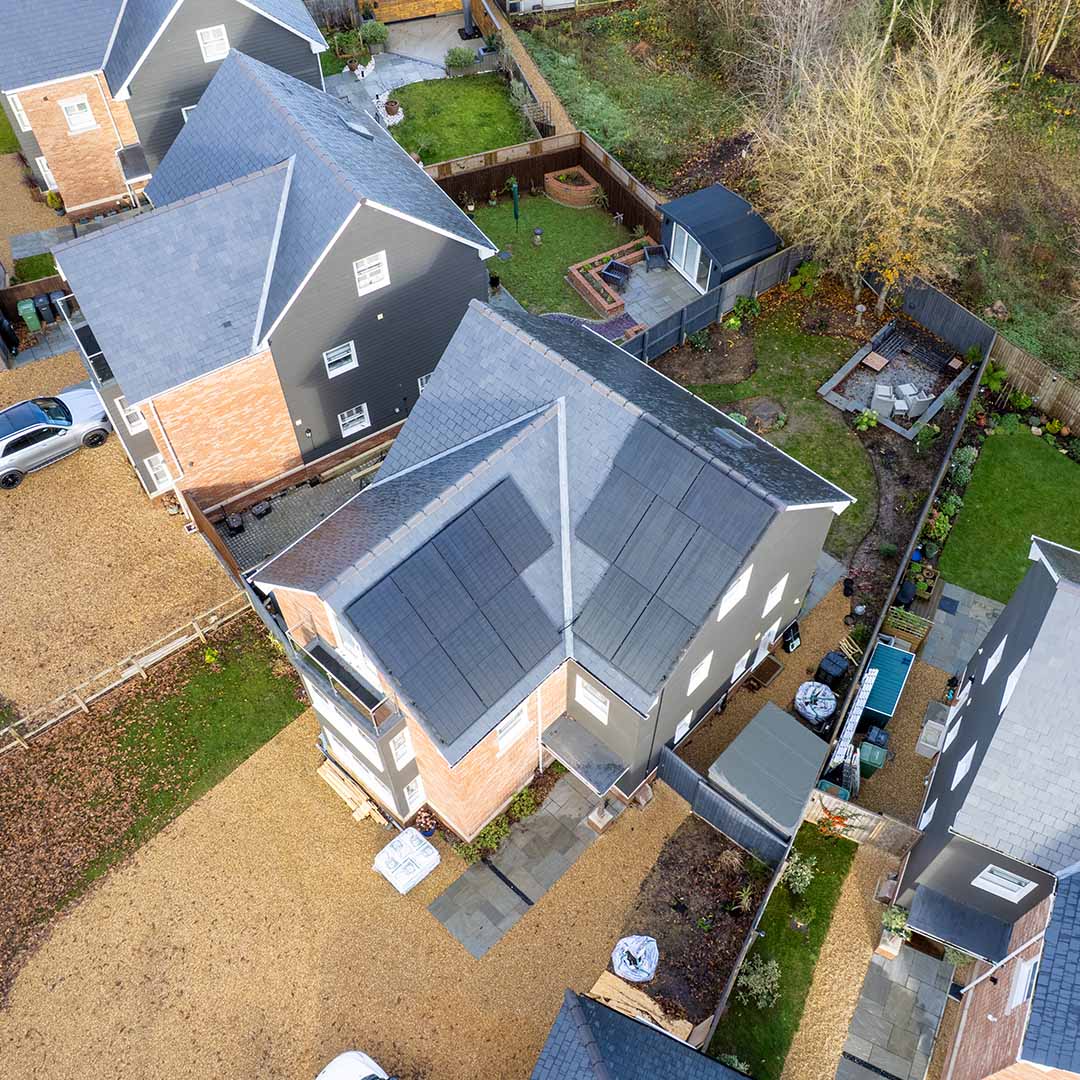
But collective buying is not automatically the cheapest or best route, and it pays to be clear-eyed about the trade-offs. The single biggest limitation is standardisation. A reverse auction rewards installers who can price a typical installation efficiently, which means the offer is built around average roofs. If your home is anything other than average — a complex hipped roof, multiple aspects, a slate or clay-tile covering that needs careful handling, restricted scaffold access, or a property in a conservation area — the standard price often does not apply, and the post-survey quote can rise sharply once the installer sees the real job. On the South Coast that matters, because Chichester, Winchester and the older parts of Portsmouth and Southampton have plenty of homes that do not fit a one-size template.
There is also the question of who actually turns up. Because one installer wins the entire regional contract, they may be working at high volume and subcontracting parts of the job, or scheduling your installation weeks or months out to clear the backlog. The aftercare relationship can feel more transactional than it does with a local firm you can ring directly. And while the panels and inverters offered are usually perfectly respectable mid-range products, you generally take the specified kit rather than choosing the components, panel layout or battery configuration that best suits your home and how you actually use electricity.
The honest comparison, then, is not 'Solar Together versus paying more', but 'Solar Together versus a couple of detailed local quotes'. We would always encourage Hampshire and Isle of Wight homeowners to register for Solar Together if a round is open — it costs nothing and gives you a useful benchmark figure. Take that figure, then get one or two quotes from established local MCS-certified installers and compare like for like: the same panel count, the same inverter quality, whether a battery and bird protection are included, what the workmanship warranty actually covers, and how export is set up. Quite often a local quote lands within a few hundred pounds of the scheme price while giving you a better-matched system, a named point of contact, and quicker installation.
It is also worth remembering what is the same regardless of who installs your system. The 0% VAT rate on residential solar and battery installations applies whether you go through Solar Together or a local installer, so that saving is not unique to the scheme. The Smart Export Guarantee — the payment you receive for electricity you export to the grid — is set by your chosen energy supplier, not your installer, so an Octopus or other competitive export tariff is available to you either way. Grid connection for any system here runs through SSEN across Hampshire, the Isle of Wight and Dorset, and the standard process is identical no matter who fits the panels.
So is collective buying worth it? For a simple, accessible roof where you value convenience and a screened installer over choice and control, it can be a sensible, fair-priced option, and there is no harm in registering to see your number. For anything more complex — and on the varied housing stock of the South Coast that is a large share of homes — the standardised offer often unravels at survey stage, and a tailored local quote tends to give better value and a relationship that lasts beyond handover. The smart move is to treat Solar Together as one benchmark in your research, not the finish line. If you would like a no-pressure local quote to put alongside any scheme figure you have been given, we are happy to provide one, or you can use our solar calculator to get a feel for the numbers first.
Thinking about solar for your home?
We design every system around your roof and your real usage, across Hampshire, the Isle of Wight, Surrey, Sussex and Dorset. Get a free, no-obligation quote →
Cornerstone guide
Solar Panel Grants & Planning on the South Coast (2026) →Read next
Warm Homes Local Grant & ECO4: Do You Qualify?
Government-backed energy efficiency schemes can fund solar and other improvements for some households. We explain who qualifies for the Warm Homes Local Grant and ECO4 on the South Coast — honestly.
Solar Panels and Your EPC Rating (and Why MEES Matters)
Solar panels can lift your home's EPC rating, which matters for landlords under MEES rules and for any homeowner thinking about future resale. Here's how it works on the South Coast.
0% VAT on Solar Panels: What's Covered and Until When?
Residential solar and battery installations currently carry 0% VAT, a significant saving for homeowners. We explain exactly what's covered, what isn't, and how long the relief is expected to last.