
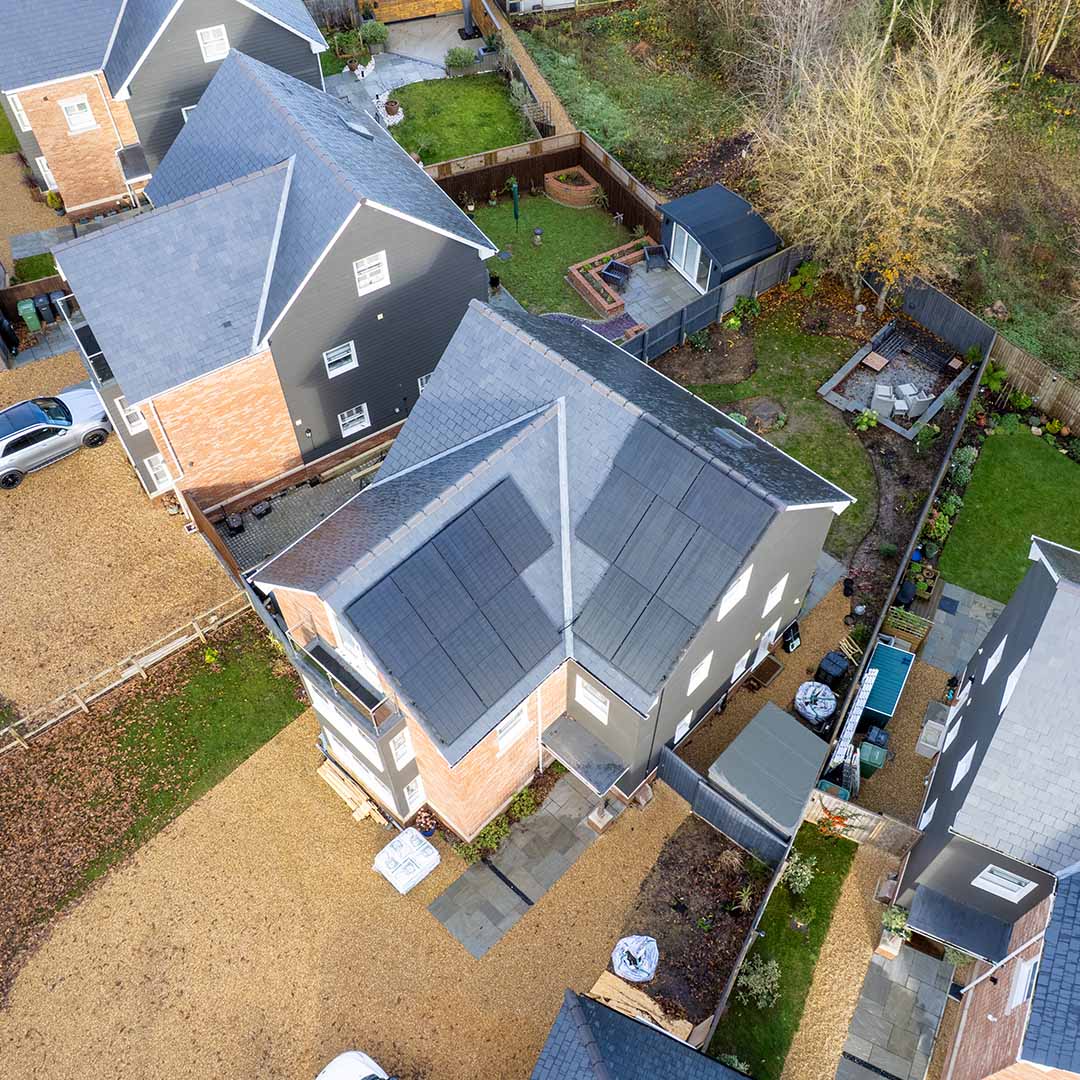
An honest rundown of the solar grants, schemes and savings available to Hampshire, Isle of Wight, Surrey, Sussex and Dorset homeowners in 2026 — including who actually qualifies.
Search 'solar panel grants' and you will find a lot of headlines promising free panels for everyone. The reality for most South Coast homeowners is more nuanced, and frankly more useful once you understand it. In 2026 there is no single grant that any household can claim, but there is a combination of means-tested schemes, council grants, group-buy pricing, and a generous 0% VAT rate that, taken together, can make solar very affordable in Hampshire, on the Isle of Wight, and across Surrey, Sussex and Dorset. This guide explains each one and, just as importantly, who it is actually for.
Start with the saving nearly everyone gets: 0% VAT. Until 31 March 2027, the supply and installation of solar panels and home battery storage on residential properties carries no VAT across Great Britain. That is a straight saving against the old 20% rate, applied to panels, inverter, labour and storage. It does not depend on income, benefits or council tax band, and a reputable MCS-certified installer applies it automatically. If you ever see VAT added to a standard domestic solar quote, ask why before signing — on a typical install this is the single biggest piece of help most households receive.
Next come the means-tested grants. ECO4, the current phase of the Energy Company Obligation, is funded by energy suppliers and aimed at low-income or vulnerable households, typically those receiving qualifying benefits or living in poorly insulated, low-EPC homes. Solar can be included alongside insulation and heating upgrades where it fits the property. Running in parallel is the Warm Homes: Local Grant, administered by councils across our region. It targets lower-income owner-occupiers, often in lower council tax bands, and the exact criteria and rollout vary between Hampshire County Council, the IoW, and the Sussex, Surrey and Dorset authorities. If your household is on a low income or qualifying benefits, these are the schemes worth asking your council about directly.
Then there are group-buy schemes, which are commonly mistaken for grants but work differently and are open to far more people. Solar Together Hampshire, and equivalent county-run schemes, gather interested homeowners and run a reverse auction so a vetted installer offers a competitive group price. You register for free, with no obligation, and receive a personalised recommendation. You are not getting a grant, you are getting bulk-buy pricing and a pre-checked installer. For middle-income households who do not qualify for ECO4 or Warm Homes, this is often the most realistic route to a discount, and it stacks neatly on top of the 0% VAT saving.
It is worth being clear about what is no longer available, because old advice circulates online. The Feed-in Tariff closed to new applicants years ago, so you cannot claim those generation payments today. The current equivalent is the Smart Export Guarantee (SEG), which is not a grant but an ongoing payment: larger licensed suppliers must pay you for surplus electricity exported to the grid. On the high-irradiance Solent coast, where systems generate roughly 1,050-1,150 kWh per kWp a year, a smart export tariff such as Octopus Flux or Outgoing can add up, especially when paired with a battery that times exports for peak-price windows.
Eligibility for the means-tested grants comes down to specifics: income or benefits, EPC rating, property type, council tax band, and which council covers you. Rather than assume, we suggest three quick checks that cover most households. First, confirm 0% VAT is shown in any quote you receive. Second, see whether your county is running a Solar Together-style group buy you can register for at no cost. Third, if you are on a low income or qualifying benefits, contact your council about Warm Homes: Local Grant and ECO4 referrals. Those three steps will tell most people exactly where they stand.
Whatever route fits, MCS certification is the thread that ties it together. Grants, SEG payments and the best export tariffs all require an MCS-certified installation. As a family-run, MCS-certified installer based in Portsmouth, every system we fit is grant- and SEG-eligible from day one, and we will tell you honestly if a particular scheme is unlikely to apply to your circumstances rather than overselling it.
The simplest next step is to get a clear picture for your own roof. You can use our online solar savings calculator for a quick estimate of generation, savings and payback for your postcode, then request a free, no-obligation quote. We will lay out the VAT saving, any grants or group-buy schemes you might use, and what your realistic return looks like — no pushy sales, just the numbers for your home.
Thinking about solar for your home?
We design every system around your roof and your real usage, across Hampshire, the Isle of Wight, Surrey, Sussex and Dorset. Get a free, no-obligation quote →
Cornerstone guide
Solar Panel Grants & Planning on the South Coast (2026) →Read next
Solar Together Hampshire: Is Collective Buying Worth It?
Solar Together is a council-backed group-buying scheme that promises discounted solar through bulk purchasing. We explain how it works on the South Coast and where it helps — and where it falls short.
Warm Homes Local Grant & ECO4: Do You Qualify?
Government-backed energy efficiency schemes can fund solar and other improvements for some households. We explain who qualifies for the Warm Homes Local Grant and ECO4 on the South Coast — honestly.
Solar Panels and Your EPC Rating (and Why MEES Matters)
Solar panels can lift your home's EPC rating, which matters for landlords under MEES rules and for any homeowner thinking about future resale. Here's how it works on the South Coast.