
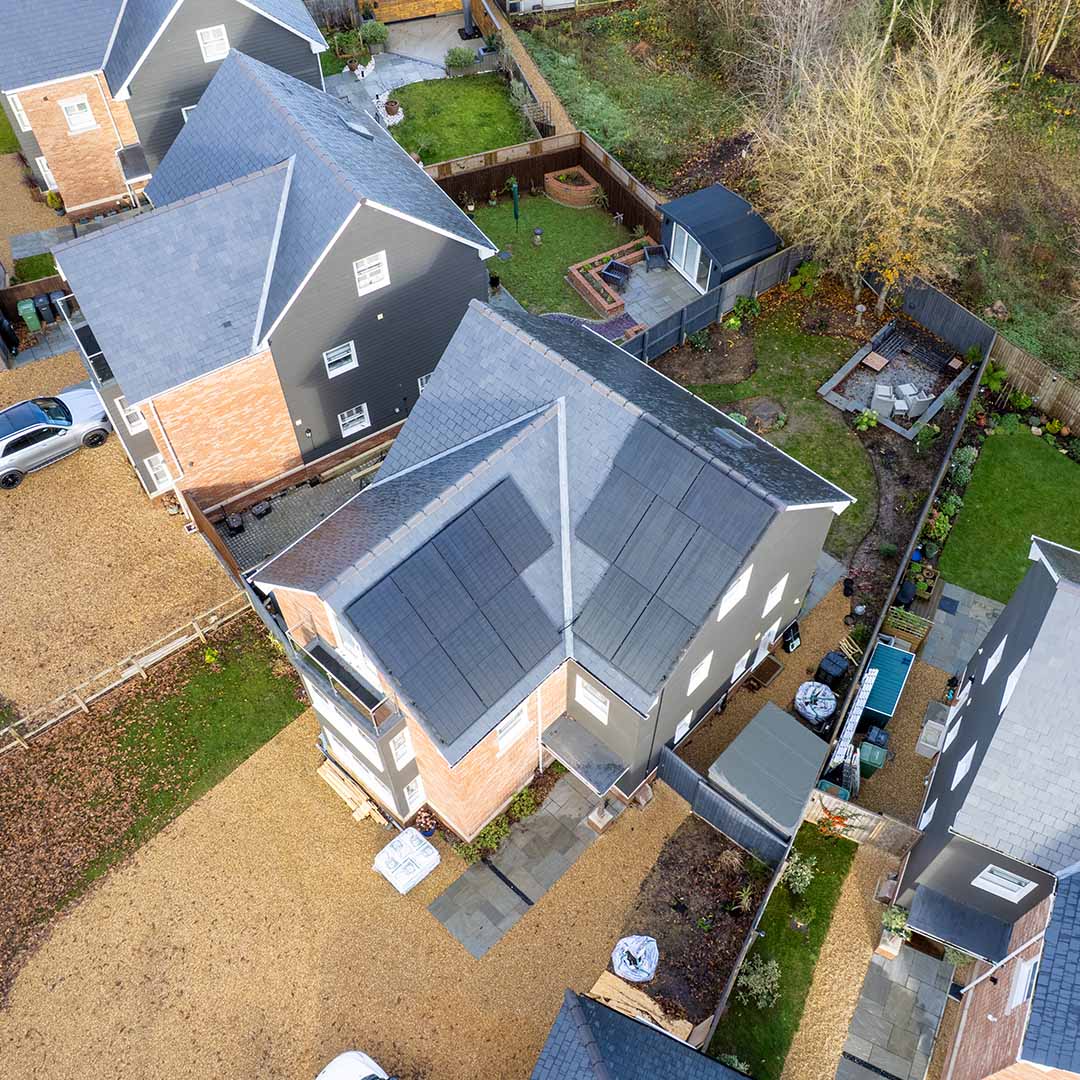
Conservation areas and listed buildings have extra rules, but solar is far from off-limits. Here's how South Coast homeowners get sympathetic, approved installs in Chichester, Winchester, Brighton and beyond.
The South Coast is full of beautiful protected places, from the conservation areas of Chichester and Winchester to Brighton's seafront and Portsmouth's historic quarters. If your home sits in one of these settings, or if it is a listed building, you may have been told solar panels are simply not allowed. That is rarely true. The rules are stricter and the process involves a few more steps, but plenty of protected properties across Hampshire, Sussex, Surrey and Dorset have approved, well-functioning solar arrays. This guide explains how to get there sympathetically.
First, the distinction that matters most. A conservation area is a designated zone where the council seeks to preserve the character of the surroundings; many homes within one are not individually special but contribute to the wider setting. A listed building is individually protected for its architectural or historic interest, and the protection is much stronger. The two are governed differently, so it is important to know which applies to your home — and some properties are both. You can check via your council's website or the National Heritage List for England.
In a conservation area, permitted development rights are narrowed rather than abolished. Panels installed on a rear or side roof slope that is not visible from a highway or public space often remain permitted development, just as they would on an unprotected house. The restriction typically bites on the principal elevation: panels facing a road or public area in a conservation area generally need planning permission. So the practical question is usually about which roof slope your panels can sit on, and whether a less visible orientation still produces a worthwhile yield — which, given the strong Solent irradiance of around 1,050-1,150 kWh per kWp, it very often does even on east or west-facing roofs.
Listed buildings are a different matter. If your home is listed, you will almost always need listed building consent for solar, regardless of which slope the panels go on, and you may need planning permission as well. Consent looks at the impact on the building's special character: the visibility of the panels, the fixings and how they attach to historic fabric, and whether the installation is reversible. This sounds daunting, but conservation officers are increasingly used to solar proposals and many listed homes have been approved with a thoughtful design. The key is to treat the application as a conversation, not a battle.
The good news is that the technology now makes sympathetic installs much easier than they once were. All-black panels with black frames and backsheets sit far more discreetly on a roof than the silver-framed panels of a decade ago. In-roof (integrated) mounting sets the panels flush within the roof line rather than sitting proud of the tiles, which conservation officers often prefer. Siting the array on a rear roof, an outbuilding, a garage or a barn keeps it out of public view entirely. And careful detailing of fixings and cable routes preserves historic fabric. We design with all of these options in mind when a property is protected.
Engaging the conservation officer early is the single most important step. Before you submit anything, an informal pre-application discussion lets the officer flag concerns and signal what they would support, which saves time and reduces the risk of refusal. Coming to that conversation with a sympathetic scheme — all-black or in-roof panels, a discreet location, clear drawings, and a note on reversibility — makes approval far more likely. As your installer, we can help prepare that case, including the design rationale and the technical detail councils expect to see.
It is also worth lining up the practical permissions alongside the heritage ones. Even on a protected property you will still need to connect to the grid through your Distribution Network Operator — SSEN for Hampshire, the Isle of Wight and Dorset, UKPN for Sussex and most of Surrey — and an MCS-certified installation remains the gateway to the Smart Export Guarantee and the better export tariffs. Heritage consent and grid connection are separate processes, and we manage both so you are not juggling multiple bodies at once.
A realistic expectation helps here. Conservation and listing rules can mean a slightly longer timeline, a more considered design, and occasionally a compromise on the most visible roof slope. What they very rarely mean is a flat 'no'. With the right approach, most protected South Coast homes can have solar that respects the building and still delivers strong generation and savings — and the 0% VAT rate applies just the same as it does to any other home.
South Coast Solar Solutions is family-run and MCS-certified, based in Portsmouth, and we have worked with the conservation settings that define our region. If your home is in a conservation area or listed, request a free, no-obligation site assessment and we will tell you honestly what is achievable, design a sympathetic scheme, and guide the consent process — with no pushy sales and no commitment until you are happy with the plan.
Thinking about solar for your home?
We design every system around your roof and your real usage, across Hampshire, the Isle of Wight, Surrey, Sussex and Dorset. Get a free, no-obligation quote →
Cornerstone guide
Solar Panel Grants & Planning on the South Coast (2026) →Read next
Solar Together Hampshire: Is Collective Buying Worth It?
Solar Together is a council-backed group-buying scheme that promises discounted solar through bulk purchasing. We explain how it works on the South Coast and where it helps — and where it falls short.
Warm Homes Local Grant & ECO4: Do You Qualify?
Government-backed energy efficiency schemes can fund solar and other improvements for some households. We explain who qualifies for the Warm Homes Local Grant and ECO4 on the South Coast — honestly.
Solar Panels and Your EPC Rating (and Why MEES Matters)
Solar panels can lift your home's EPC rating, which matters for landlords under MEES rules and for any homeowner thinking about future resale. Here's how it works on the South Coast.