
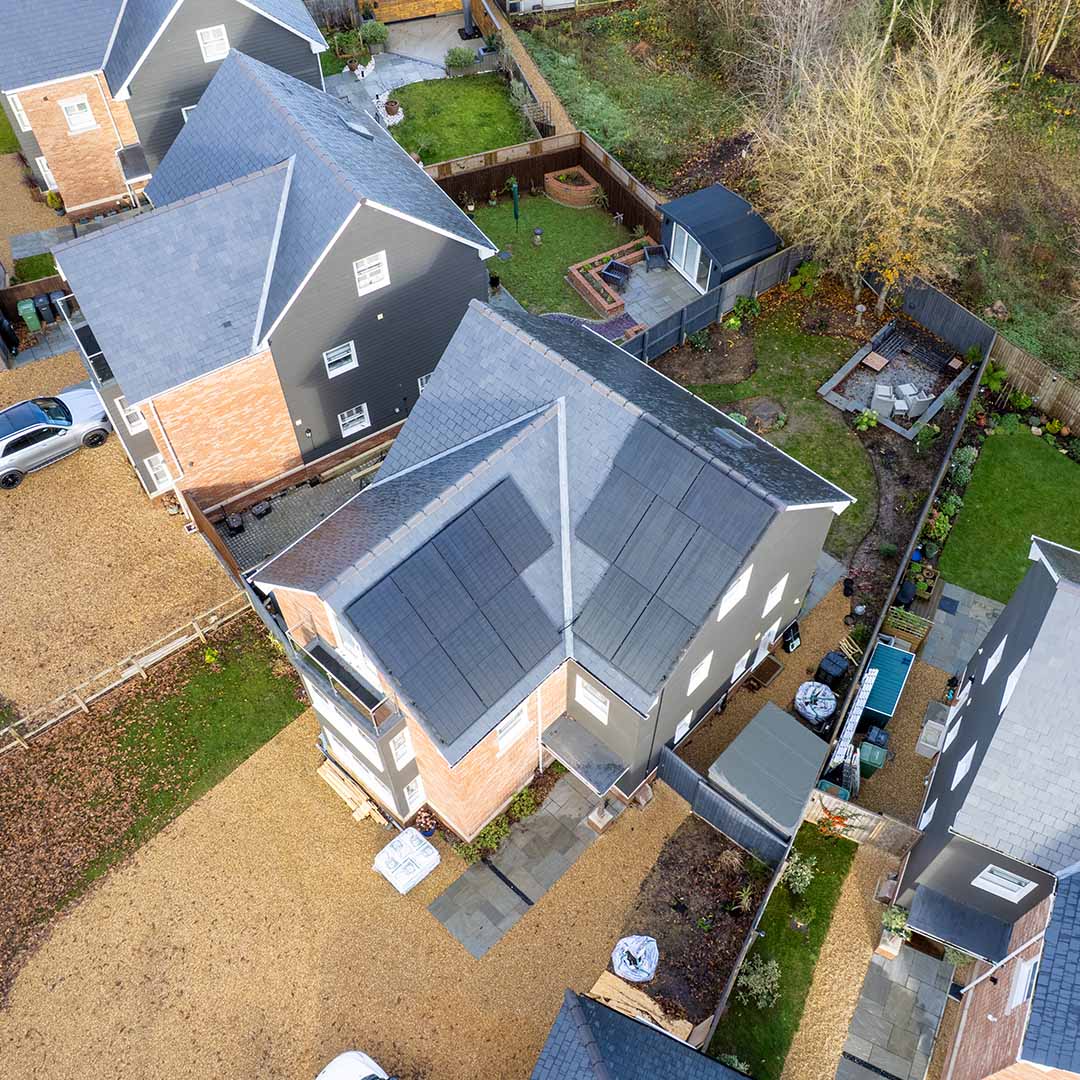
A practical UK guide to sizing a solar battery - how to work out the right kWh from your usage, why oversizing wastes money, and how South Coast generation affects the answer.
Sizing is the single most important decision when buying a solar battery - and the one most often got wrong. Buy too small and you import expensive grid power most evenings; buy too big and you pay thousands for storage you will rarely fill. As a family-run, MCS-certified installer on the South Coast, we would rather talk a customer down to the right size than sell them more than they need. Here is how to work it out honestly.
Start with one principle: a battery only saves you money on electricity you would otherwise buy from the grid. So the goal is not to store your entire daily generation - it is to cover the energy you use when your panels are not producing, mainly the evening and overnight. That is why most UK homes land somewhere between 5kWh and 13kWh of usable storage. The right number is the gap between your daytime solar and your after-dark demand.
To estimate it, grab a recent electricity bill and find your annual kWh. Divide by 365 for a rough daily figure - the UK average is around 7 to 8kWh per day, but homes vary enormously. Then think about when you use power. If most of your consumption is in the evening and early morning, you need more storage to cover it. If you are out all day and use little at night, a smaller battery captures the value without waste. The honest target is your overnight and early-morning usage, not the whole day.
Your household shape matters too. A retired couple in a two-bedroom Winchester home with low evening loads may be perfectly served by 5kWh. A four-bedroom Southampton family with teenagers, tumble dryers and gaming PCs runs much higher evening demand and may justify 10kWh or more. Add an EV or a heat pump and the picture changes again - those loads can double your storage requirement, which is exactly where modular batteries you can expand later become attractive.
South Coast geography works in your favour. With Solent irradiance around 1,050 to 1,150 kWh per kWp, a well-positioned array across Hampshire, the Isle of Wight, Surrey, Sussex and Dorset produces strong summer surplus - more than enough to fill a sensibly sized battery most days. That lets you size with confidence rather than guessing. It also means your surplus, once the battery is full, earns Smart Export Guarantee payments when sent back to the grid.
Smart tariffs change the maths in a useful way. On an Octopus time-of-use tariff you can charge the battery overnight on a cheap rate even when there is little sun, then discharge during expensive peak hours. This makes a slightly larger battery more worthwhile in winter, because you are arbitraging the price difference rather than relying solely on solar. If cutting bills year-round is your priority, factor tariff charging into your sizing rather than thinking about summer alone.
Avoid the two classic mistakes. Oversizing is the expensive one - a 13kWh battery in a home that only uses 5kWh overnight will sit half-empty most days, and that unused capacity never pays for itself. Undersizing is the quieter cost - a battery that empties by 9pm leaves you importing pricey peak power for the rest of the evening. The sweet spot is a battery that comfortably covers your typical evening and overnight use with a little headroom for darker months.
If this feels like a lot of variables, that is because it is - which is exactly why we never quote a size without understanding your home. Our solar battery calculator turns your usage into a sensible starting figure in a couple of minutes, and a free survey lets us check your roof, inverter and real consumption before recommending anything. The result is a battery sized to your life, not to a sales target - get a free quote and we will get the number right.
Thinking about solar for your home?
We design every system around your roof and your real usage, across Hampshire, the Isle of Wight, Surrey, Sussex and Dorset. Get a free, no-obligation quote →
Cornerstone guide
Best Solar Battery UK 2026: Buyer's Guide →Read next
Can You Add a Battery to Existing Solar Panels?
Yes, you can almost always retrofit a battery to existing solar panels. Here is how it works on South Coast homes, what it costs, and when it makes sense.
Battery Storage Without Solar: Is It Worth It?
You don't need solar panels to benefit from a home battery. Here's how battery storage on a cheap overnight tariff stacks up for South Coast homeowners.
Fox ESS vs GivEnergy vs Tesla: Home Batteries Compared
An honest comparison of three popular home batteries — Fox ESS, GivEnergy and Tesla Powerwall — for South Coast homeowners weighing capacity, cost and support.