
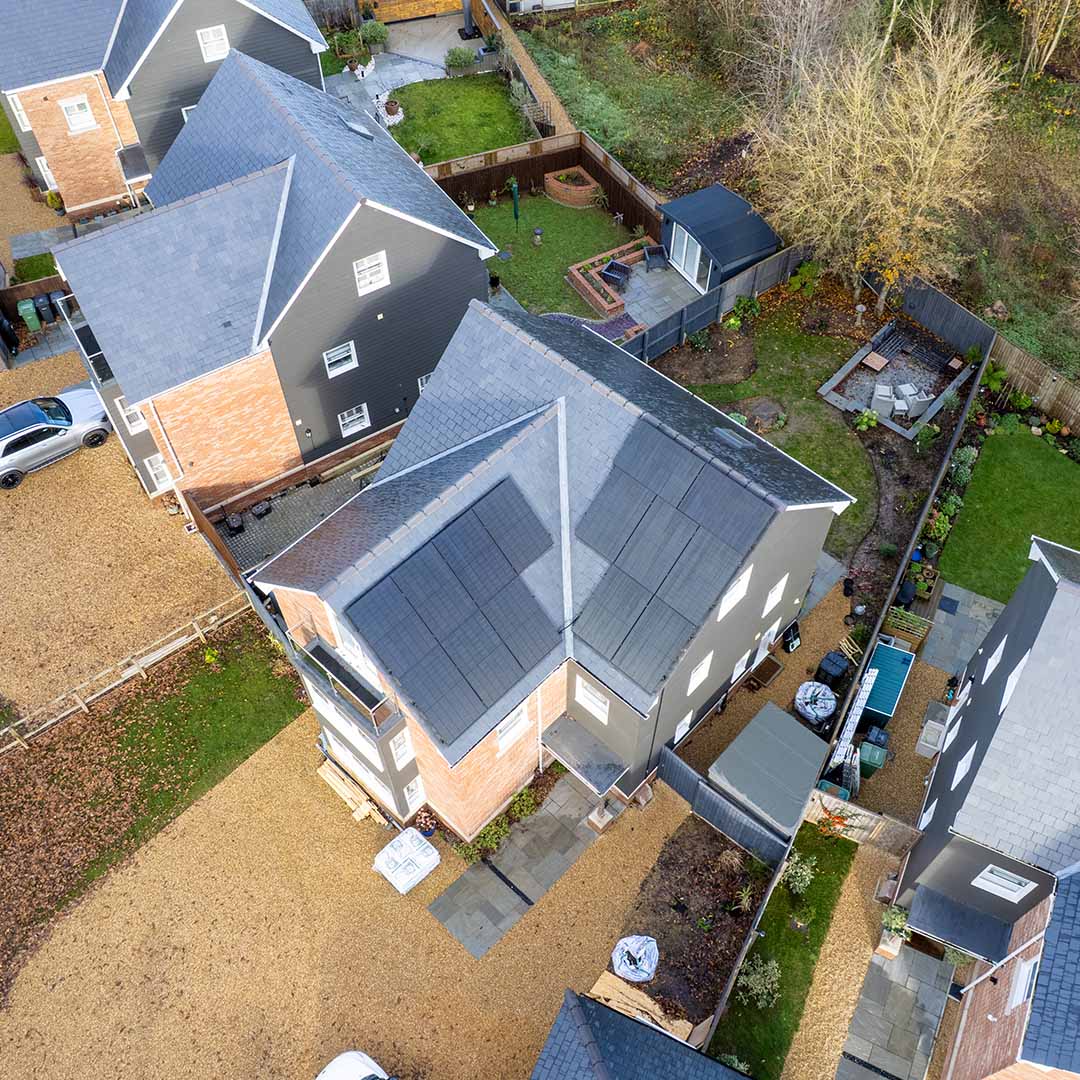
Havant Borough has 14 conservation areas and one Article 4 direction. What the August 2026 permitted development rules mean for solar on your home.
If you live in Havant and you are thinking about solar, the planning question usually comes up early, especially in Langstone, Emsworth or the older parts of Bedhampton. The rules are clearer than they used to be, and for most houses the answer is simpler than people expect. Here is what applies in 2026, what is different in Langstone, and what to check before you ask for quotes.
Start with the council's own list. Havant Borough Council has 14 conservation areas: Black Dog, Brockhampton, Coastguards, Emsworth, Langstone, Lymbourn Road, Mill Lane, North Hayling, Old Bedhampton, Sir George Staunton, St Faith's, St John's, St Peter's and Wade Court. Only one of them, Langstone, has an Article 4 direction. If your home is outside all of those, conservation-area rules don't apply to you, although a listed building is a separate matter.
For a house in a conservation area, the rule that matters is Part 14 of the General Permitted Development Order, as amended by S.I. 2026/896 from 27 August 2026. Solar panels on a house lose permitted development in a conservation area only when they are installed on a wall, balcony or roof enclosure that fronts a highway. Panels on a roof slope are not caught by that condition, even if the slope faces the street. The general limits still apply everywhere: on a pitched roof the panels must not protrude more than 0.2 metres from the roof surface or sit higher than the highest part of the roof, excluding the chimney.
Flat roofs are the exception to watch. A flat-roof array on land in a conservation area needs an application for prior approval before work starts. That is not full planning permission, but it is a step you cannot skip, and it adds time. If your home has a flat-roofed extension that looks ideal for panels, raise it early so the application goes in first.
Langstone is different because of its Article 4 direction. An Article 4 direction removes specific permitted development rights on the properties it covers, and what it removes depends on the wording of that direction. So if you live in Langstone, don't rely on the general rules above. Check the direction with Havant Borough Council, or ask your installer to check it before any design work, and allow time for a planning application if one turns out to be needed.
Listed buildings sit outside all of this. Householder solar rights under Class A don't apply to a listed house or to buildings within its curtilage, so listed building consent comes into it, and that conversation should happen before anyone draws a panel layout. If you are not sure whether your home is listed, the National Heritage List for England will tell you.
Planning is only half of the paperwork. Every Havant home is on SSEN's network, so the grid connection needs sorting too. A system up to 3.68kW per phase is notified under G98 after installation. A battery, or a larger inverter, needs a G99 application approved by SSEN before anything is fitted. Build that approval time into your plans alongside any planning step.
What does this mean in practice? For most houses in Havant, including most in its conservation areas, panels on the roof are permitted development and the main job is good design: all-black panels that sit close to the roof, tidy cable routes, and a sensible place for any battery. For Langstone, listed homes and flat roofs, there is an extra step, and it is better to know that before you sign.
Our prices are published, so you can compare quotes on the same footing. Solar only starts from £4,995 for 8 panels, solar with a Fox ESS 5.76kWh battery from £6,995, and solar with a Tesla Powerwall 3 from £12,920, all subject to survey.
We are based in Portsmouth, 7 miles from Havant, and we confirm the planning and SSEN position for your property during the survey. If you want a local team to look at your roof, our page for solar installers Havant sets out what a PO9 roof typically produces and how we handle the SSEN application. For the rest of the county, see our overview of solar panels in Hampshire.
Thinking about solar for your home?
We design every system around your roof and your real usage, across Hampshire, the Isle of Wight, Surrey, Sussex and Dorset. Get a free, no-obligation quote →
Cornerstone guide
Solar Panel Grants & Planning on the South Coast (2026) →Read next
Solar Together Hampshire: Is Collective Buying Worth It?
Solar Together is a council-backed group-buying scheme that promises discounted solar through bulk purchasing. We explain how it works on the South Coast and where it helps — and where it falls short.
Warm Homes Local Grant & ECO4: Do You Qualify?
Government-backed energy efficiency schemes can fund solar and other improvements for some households. We explain who qualifies for the Warm Homes Local Grant and ECO4 on the South Coast — honestly.
Solar Panels and Your EPC Rating (and Why MEES Matters)
Solar panels can lift your home's EPC rating, which matters for landlords under MEES rules and for any homeowner thinking about future resale. Here's how it works on the South Coast.
Ask us about your home
A free, no-obligation quote from our MCS-certified team.